 Whitepaper
Dynamic Reactor Technology: Safe & Efficient Multi-Phase Chemistry
Dr Kevin van Eeten of Flowid looks at the implementation of dynamic flow reactors for multi-phase chemistry.
- Type
- Magazine Article
- Published In
- Speciality Chemicals Magazine
- Date
- Sep/Oct 2023
In Short
Understanding the advantages and possibilities of continuous manufacturing at an early stage is essential to implementing flow in existing batch processes and during the development of new batch to flow conversions.
Dynamic flow reactors increase shear and turbulent mixing, and allow for precipitation reactions. Flowid's dynamic flow reactor, SpinPro, is a type of rotor-stator spinning disc reactor that is already used in multiple continuous manufacturing skids.
- ≥ 40×Gas-Liquid Mass Transfer vs Conventional Reactors
- 130 → 22MWh/Year Energy Consumption in One HCl Case
- 300 mLReactive Hold-Up of a ~1 m³ Production Skid
How a Rotor-Stator Spinning Disc Reactor Works
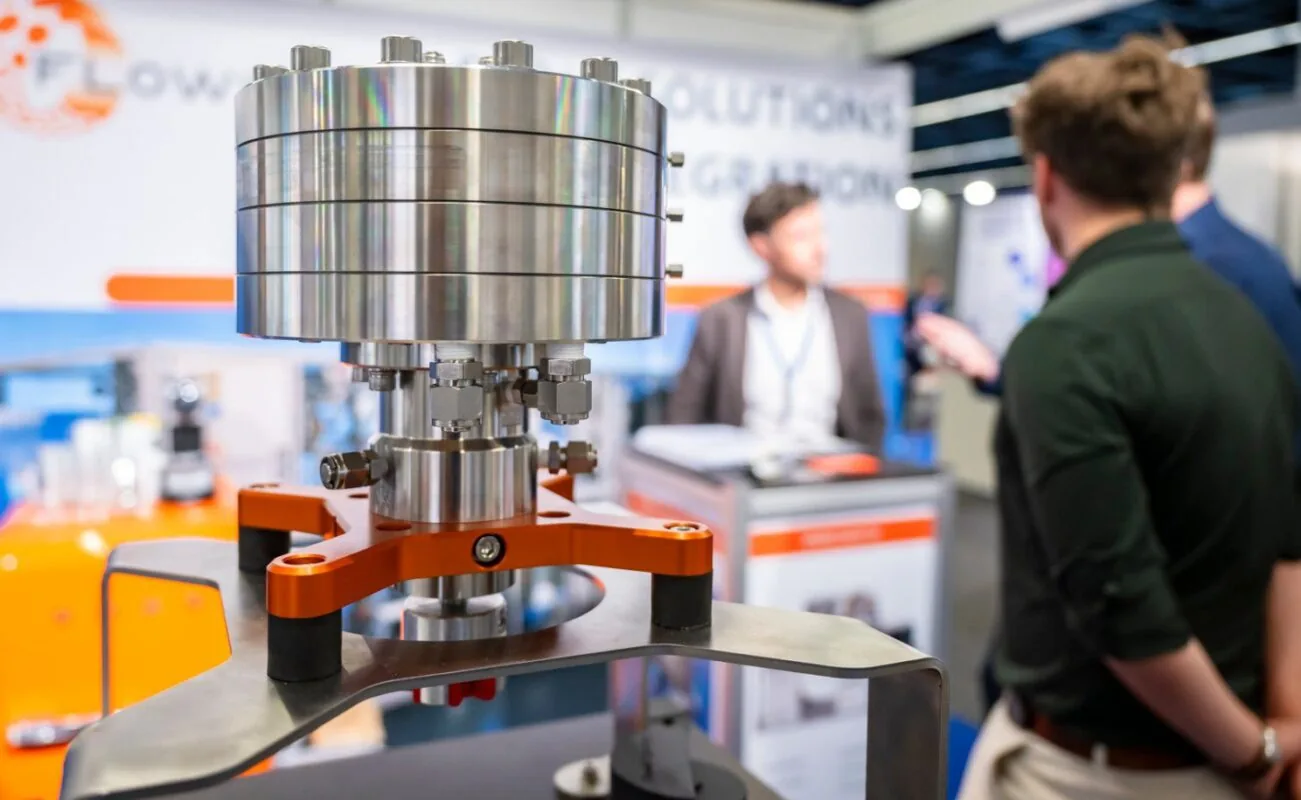
A rotor-stator spinning disc reactor consists of a number of rotating discs (rotors), each inside a narrowly fitting encasing (stator). The disc is about the size of a DVD, rotating with a speed up to 4,000 rpm, while the typical rotor-stator distance is one millimetre. The very high rotational velocities lead to highly intense mixing, directly improving the mass transfer rate.
The large difference in velocity over the very narrow gap between the rotor and the stator leads to extremely fine dispersions of droplets and bubbles with a very high interfacial area, further enhancing mass transfer. In comparison with other static flow reactors, the mixing intensity and level of turbulence do not depend on the flow rate, allowing an independent variation of both residence time and mass or heat transfer effects.
Multi-Phase Reactions
Aside from being able to safely perform highly exothermic reactions, the dynamic reactor technology also offers major benefits for another type of reaction in chemical processing: multi-phase chemical reactions. These reactions are ubiquitous steps in many synthesis routes in the speciality chemicals and pharmaceutical industries.
When comparing mass transfer rates between dynamic and batch reactors, it is evident that batch vessels suffer from drastically lower mass transfer rates, as gas-liquid mass transfer rates in rotor-stator spinning disc reactors are at least 40 times higher than in conventional reactors.
From a Nine-Day Batch Cycle to Continuous Production
The conventional batch process was performed in a 10 m³ stirred, glass-lined batch reactor, entailing a nine-day batch cycle with cooling at 0 °C. These long cycle times and the large amount of reactive volumes not only pose a significant safety risk, they also require a lot of energy to keep the reactor at the required low temperature.
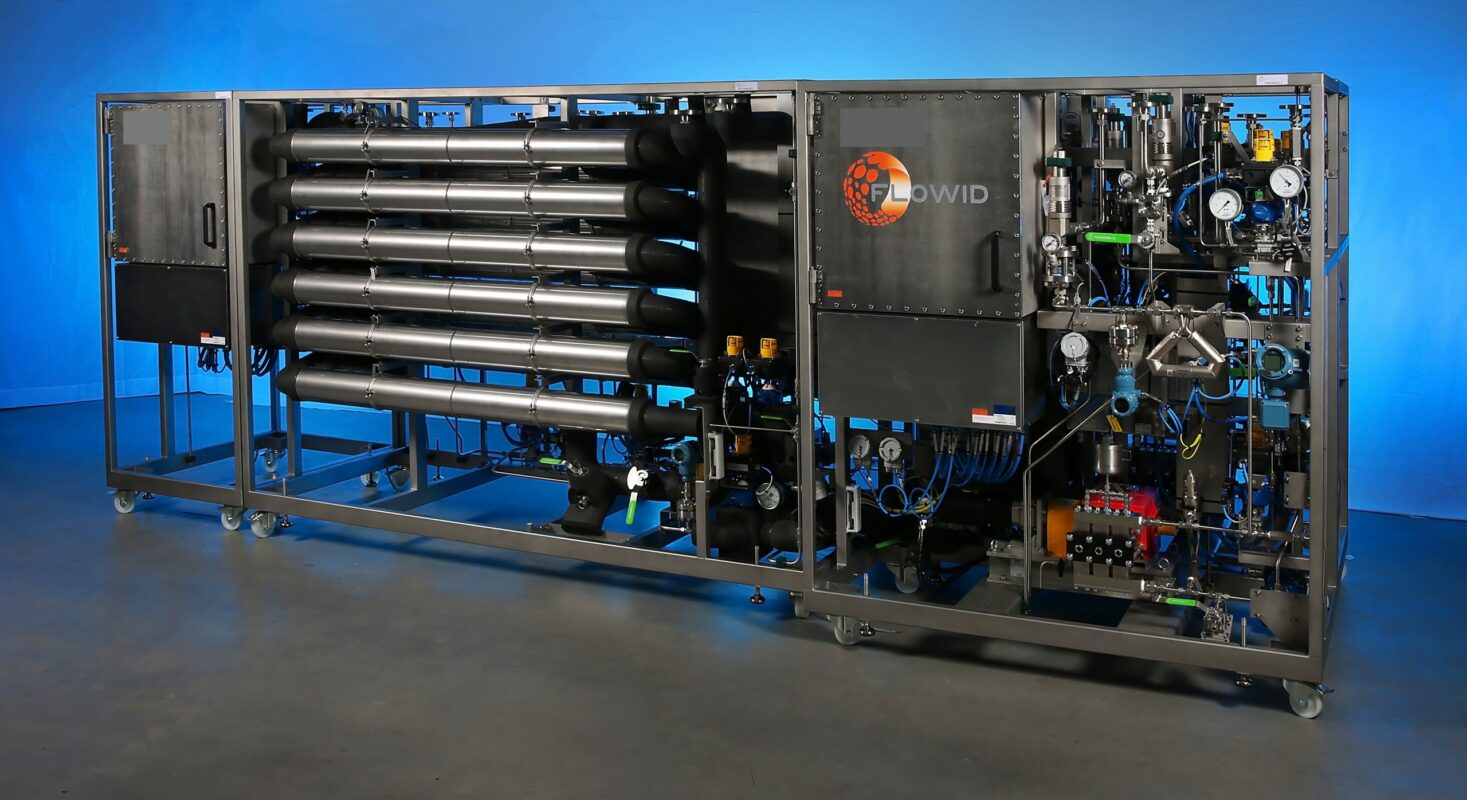
Using our compact dynamic flow reactor, Flowid has designed a production skid of about 1 m³ with a reactive hold-up of only 300 mL. In stark contrast to the batch process, the continuous system has resulted in an intrinsically safe, more accurately controllable and highly efficient process. Due to continuous production at ambient temperature, production capacity has effectively doubled, while circumventing the need for expensive cooling measures. This has led to substantial reductions in energy consumption (from 130 to 22 MWh/year) and CO2 emissions (from 75 to 12.5 tonnes).
Table 1 of the article
Industrial Cases With Major Advantages From Going to Flow
GasLiquid(s)Advantages of Going to Flow
- HClOrganicMore than 80% reduction of energy cost and CO2 emissions while doubling production capacity. Large reduction in hold-up of corrosive gas.
- CO2OrganicLarge increase in production rate. The old process was cryogenic, while this was no longer necessary in the SpinPro, leading to a large cost reduction for energy.
- H2SOrganic & aqueousElimination of toxic gas hold-up and thus an intrinsically safe process. This allowed room to expand production capacity without problems with safety regulations.
Conclusion
By combining the advantages of dynamic technology with flow chemistry, the dynamic flow reactor increases mass transfer rates and thus intensifies multiphase chemical reactions. Recent applications in multi-phase processing have allowed customers to meet increased demand while still complying with safety and environmental regulations. In addition, their processes can now be performed inherently safely, while simultaneously running more economically. With its proven reliability and demonstrated advantages, the SpinPro reactor is becoming increasingly prevalent in production sites worldwide, underscoring its position as a valuable tool in the chemical industry's transition to continuous manufacturing.
More From Our Library
Keep Reading on Continuous Processing.
- Whitepaper
 Peer-Reviewed Paper
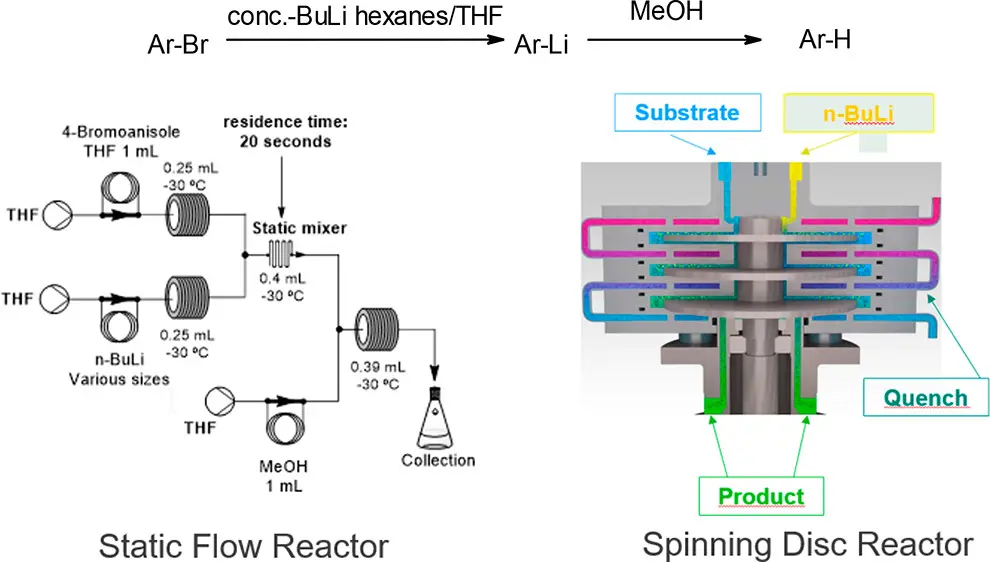
Continuous Processing of Concentrated Organolithiums in Flow Using Static and Dynamic Spinning Disc Reactor Technologies
 Peer-Reviewed Paper
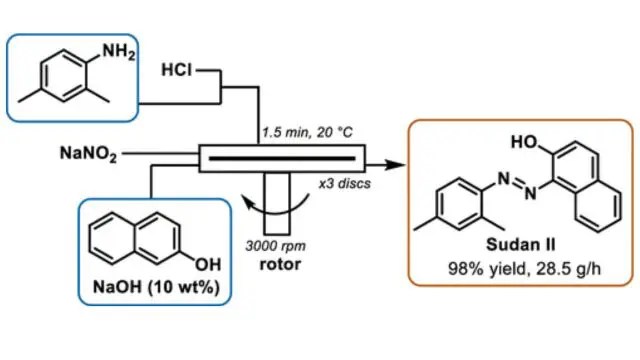
Dynamic Spinning Disc Reactor Technology to Enable In Situ Solid Product Formation in a Diazotization and Azo Coupling Sequence
Start a Project
Tell us about your reaction and your current process. We will tell you what continuous processing could change for it.